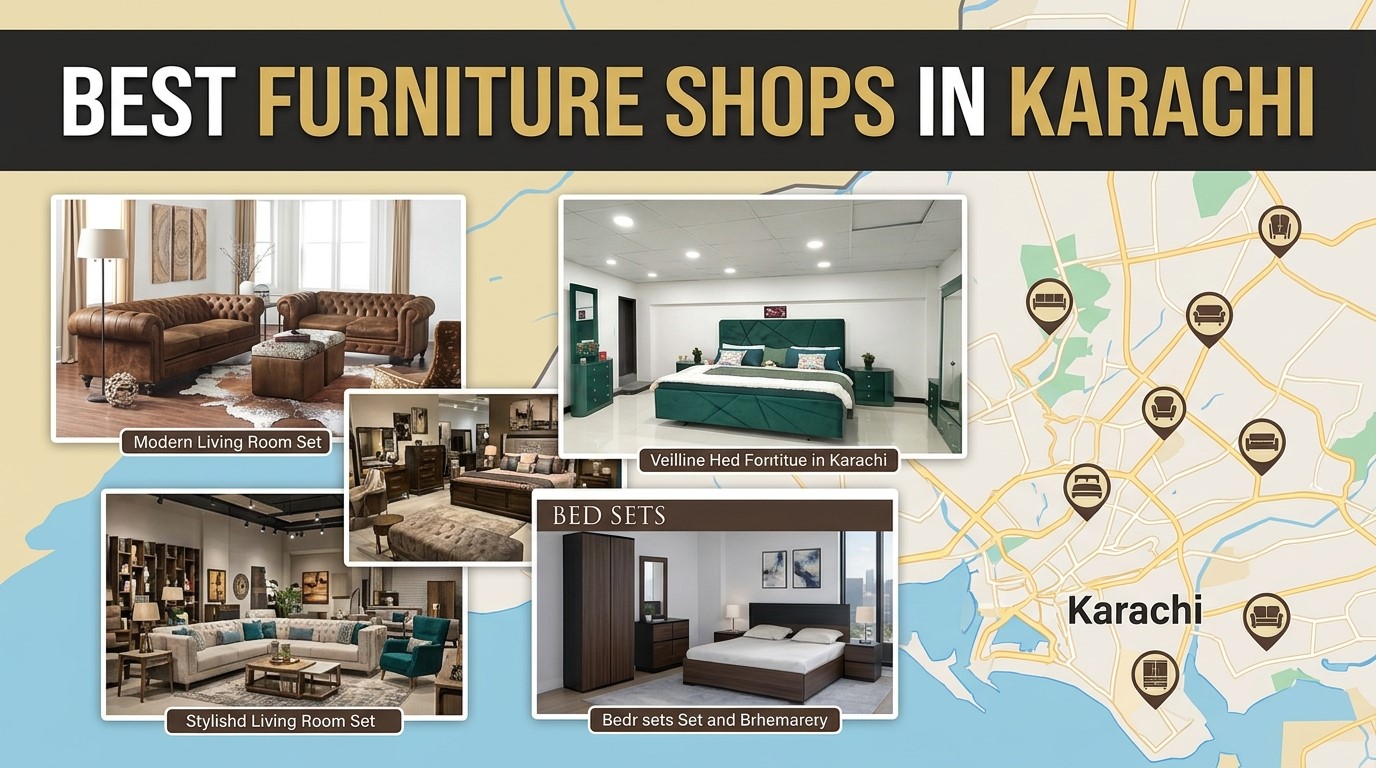
Karachi has one of the most varied furniture markets in Pakistan, sprawling commercial districts lined with showrooms, smaller family-run workshops tucked into residential neighborhoods, large factory outlets on the city’s outskirts, and a growing number of brands that operate primarily online. For anyone furnishing a home, that variety is both an opportunity and a challenge. More choice means more competition and often better prices, but it also means quality, service, and reliability can vary enormously from one shop to the next, sometimes even within the same street.
Best Furniture Shops in Karachi is also a genuinely subjective word here. The best furniture shop for someone furnishing an entire home on a tight budget looks very different from the best shop for someone commissioning a single custom piece, or someone who values fast delivery over the widest possible selection. This guide breaks down what actually separates reliable, well-regarded furniture shops from disappointing ones, how to evaluate a shop before committing to a purchase, and where a brand like JF Homes fits into that landscape for buyers focused on bedroom furniture specifically.
Why the Shop Matters as Much as the Furniture Itself
It’s tempting to focus entirely on the furniture and treat the shop as incidental just the place the transaction happens. In practice, the shop shapes far more of the experience than that. A good shop gets measurements and specifications right, communicates honestly about delivery timelines, stands behind its product if something goes wrong, and treats a return customer’s trust as worth protecting. A poor one can leave you with furniture you otherwise like, wrapped in a frustrating buying experience that colors how you feel about the purchase for years.
This matters more with furniture than with almost any other household purchase, because furniture is large, expensive relative to most household items, and genuinely inconvenient to exchange or return once delivered. A mistake here isn’t like ordering the wrong size shirt it’s a multi-week, sometimes multi-month process to correct, if it can be corrected at all. Choosing well upfront saves far more hassle than trying to fix a bad decision after delivery.
What Actually Separates a Good Furniture Shop From a Mediocre One
A handful of practical, checkable factors consistently distinguish reliable furniture shops from ones that create problems down the line. None of these require insider knowledge; they’re things any buyer can verify with a few direct questions.
Transparency About Materials
A trustworthy shop will tell you clearly and specifically what a piece is made from solid wood, a particular type of engineered wood, MDF with a veneer or laminate finish rather than relying on vague, feel-good terms like “premium quality” or “imported material” without further explanation. If a salesperson deflects specific material questions or gives inconsistent answers when asked twice, that’s a meaningful red flag worth noting before committing to a purchase.
Consistency Between Display Pieces and What Gets Delivered
One of the more common frustrations in furniture retail, not just in Karachi but broadly, is a mismatch between the showroom sample and the actual delivered product. Some shops display a well-finished, carefully assembled sample piece but deliver a lower-grade version manufactured to cut costs on the actual order. Asking directly whether the delivered piece will be identical in material, finish, and construction to the display model and getting that confirmed in writing where possible protects against this gap.
Clear, Upfront Pricing
Reliable shops disclose delivery charges, assembly fees, and any applicable taxes as part of the initial quote, rather than letting these costs surface only at checkout or, worse, on delivery day when negotiating leverage has shifted entirely to the shop. A shop that hesitates to give a full cost breakdown before payment is a shop worth being cautious with.
Realistic Delivery Timelines
Shops that provide a specific, realistic delivery window — and consistently meet it — tend to be more reliable overall than those that promise unusually fast turnaround purely to close a sale quickly. Custom or made-to-order furniture in particular typically requires genuine production time; a shop quoting an unrealistically short timeline for a custom bedroom set is either cutting corners in production or setting expectations it doesn’t intend to meet.
A Clear Policy for Damage, Defects, and Returns
Furniture is bulky, heavy, and can be damaged in transit even with careful handling. Knowing in advance exactly what happens if a piece arrives with a defect or transit damage repair, replacement, partial refund removes a significant amount of stress from what can otherwise become a drawn-out dispute after the fact.
After-Sales Support
A shop’s responsiveness after the sale is often the clearest signal of how seriously it takes its reputation. Shops that remain easy to reach for warranty issues, replacement parts, or general follow-up questions months after a purchase tend to be more dependable long-term than ones that were highly responsive during the sales process but become difficult to reach once payment has cleared.
JF Homes structures its own process around each of these points specifically — consistency between showroom and delivered product, transparent pricing with no hidden costs added later, and clear communication on both delivery timing and what happens if something doesn’t arrive as expected.
Types of Furniture Shops in Karachi and What Each Is Best For
Karachi’s furniture market roughly breaks down into a few distinct categories, and understanding which type you’re dealing with helps set realistic expectations for price, quality, and service.
Large Commercial Showrooms
These are often the most visible furniture retailers, typically located in major commercial areas with substantial floor space and a wide range of ready-made furniture on display. They tend to offer the advantage of seeing and testing a large selection in person, often with financing options and organized delivery logistics. The trade-off can be higher overhead costs reflected in pricing, and sometimes less flexibility for customization compared to smaller workshops.
Small, Family-Run Workshops
Scattered through many residential and semi-commercial areas of the city, these smaller operations often specialize in custom or semi-custom furniture, built closer to order rather than mass-produced and stocked. They can offer more flexibility on design specifics and sometimes better pricing due to lower overhead, but quality can vary significantly from one workshop to another, and formal after-sales processes may be less structured than at larger retailers.
Factory Outlets
Some manufacturers sell directly from production facilities, often located toward the edges of the city, at prices that reflect the absence of a middleman retail markup. This can mean genuinely good value, but it usually also means a narrower on-site selection focused on what’s currently in production, and potentially less convenient logistics for buyers without their own transport for larger pickups.
Online-First Furniture Brands
A growing number of furniture brands, JF Homes included, operate with a strong online catalog presence, sometimes alongside a smaller physical showroom or by-appointment viewing option. This model tends to offer a wider range to browse without time constraints, detailed product information available upfront, and the convenience of comparing multiple options without visiting several locations across a traffic-heavy city. The trade-off, as with any online purchase, is not being able to physically test the piece before ordering though detailed photos, specifications, and clear return policies can substantially offset this.
In-Person Showrooms vs. Online-First Shopping: Making the Right Choice for You
Both approaches have genuine advantages, and the better choice often depends on what specifically you’re buying and how confident you already are in your preferences.
Visiting a showroom in person allows you to physically test drawer slides, feel the actual weight and texture of the material, and see true color and finish under real lighting conditions all details that are genuinely harder to judge from photos alone, no matter how well-lit or professionally shot they are. This tends to matter most for larger, higher-investment pieces like a complete bedroom set, where getting the material wrong is a more costly mistake.
Online-first shopping, by contrast, offers the ability to browse a far wider catalog without the time cost of visiting multiple physical locations across a large, traffic-heavy city, and it often makes side-by-side comparison of similar pieces considerably easier. For buyers who already have a clear sense of what they want, or who are comparing options across several brands before narrowing down a shortlist, this can be a more efficient starting point.
A practical middle-ground approach that works well for many buyers is browsing and shortlisting extensively online first, then either visiting a showroom (where available) or requesting more detailed photos, videos, or samples before finalizing a larger order. JF Homes supports this hybrid approach through a detailed online catalog alongside options to inquire further, view material samples, or arrange further verification before committing to a full bedroom set purchase.
Questions Worth Asking Any Furniture Shop Before You Buy
Regardless of which type of shop you’re considering, a consistent set of direct questions tends to reveal a great deal about how reliable the buying experience is likely to be.
- What exact material is this piece constructed from, and is that specification stated clearly on the listing, quote, or receipt?
- Will the delivered product be identical to the displayed or photographed sample in material, finish, and construction?
- What’s the realistic delivery window, and does the quoted price include delivery and assembly, or are these separate costs?
- What happens specifically if the piece arrives damaged, defective, or different from what was ordered?
- Is there any warranty on hardware components like drawer slides, hinges, or structural joints?
- Can the shop provide references, reviews, or examples of previous work relevant to what you’re ordering?
A shop that answers these questions clearly, consistently, and without hesitation is generally a far safer choice than one that gives vague, evasive, or inconsistent responses — regardless of how impressive the showroom itself looks or how persuasive the initial sales pitch is.
Red Flags Worth Taking Seriously
A few specific warning signs are worth treating as genuine cause for caution rather than minor inconveniences to overlook.
Pressure to pay in full before any written confirmation of specifications. Legitimate shops are generally comfortable providing a clear written order confirmation — dimensions, material, color, price — before requesting full payment, particularly for custom or made-to-order pieces.
Reluctance to specify materials in writing. If verbal claims about material quality aren’t matched by anything documented on the receipt or order confirmation, that gap can become a real problem if a dispute arises later.
Unusually large discounts with no clear explanation. While genuine sales and clearance pricing exist, steep, unexplained discounts on custom or premium-branded furniture can sometimes signal lower-grade materials being substituted without disclosure.
No clear process for handling delivery damage. A shop that can’t clearly explain what happens if a piece arrives damaged likely doesn’t have a structured process for handling it when it inevitably happens.
Inconsistent information between different staff members or communication channels. If the details you’re given in person differ noticeably from what’s stated online or over the phone, that inconsistency is worth resolving before finalizing an order, not after.
Why Reputation Builds Slowly in Furniture Retail
Unlike smaller, frequent purchases, furniture buying decisions happen infrequently for most households often just a handful of times across many years. This means a furniture shop’s genuine reputation is built gradually, through repeat customers, word-of-mouth referrals, and consistent quality maintained over a long period, rather than through any single marketing campaign or discount promotion, however effective that promotion might be at driving short-term traffic.
This is part of why it’s genuinely worth spending a bit of extra time researching a shop’s track record before a significant purchase like a full bedroom set, rather than deciding based purely on the first appealing listing or advertisement encountered. Checking reviews across multiple platforms, asking for references from recent customers, and looking specifically for patterns in feedback rather than isolated positive or negative comments gives a considerably more reliable picture than any single review or testimonial in isolation.
JF Homes has built its presence in Karachi’s furniture market around this kind of long-term consistency, prioritizing repeat customers and referral-driven growth over short-term sales tactics that tend to prioritize closing a single transaction over building lasting trust.
How to Compare Multiple Shops Efficiently
When shortlisting several furniture shops for a significant purchase, a structured comparison tends to produce better results than an ad hoc, showroom-by-showroom impression-based approach. Creating a simple comparison covering material specification, total price including delivery and assembly, stated delivery timeline, return and damage policy, and any available reviews or references makes it far easier to spot which shop genuinely offers the best overall value, rather than simply the lowest sticker price or the most polished showroom presentation.
It’s also worth factoring in less tangible elements, such as how clearly and promptly a shop communicates during the pre-purchase inquiry stage. A shop that’s slow, vague, or inconsistent in answering questions before you’ve paid anything is unlikely to become dramatically more responsive after payment has been received.
Financing, Payment Methods, and Negotiation
Payment structures vary noticeably across Karachi’s furniture market, and understanding the common options helps buyers avoid surprises during checkout. Many shops accept a mix of cash on delivery, bank transfer, and card payments, though larger or fully custom orders often require a partial advance payment before production begins, with the balance due on or before delivery. For particularly large purchases, such as furnishing an entire home at once, some shops offer installment plans or financing arrangements, either directly or through a partner bank — it’s worth asking specifically about this if spreading the cost is a priority, since it isn’t always advertised upfront.
Negotiation is common practice in much of Karachi’s furniture retail, particularly at physical showrooms and smaller workshops, though the room for meaningful negotiation tends to shrink for brands with fixed, published pricing. When negotiating, it helps to focus on total value rather than price alone — asking whether delivery or minor customization can be included at the quoted price, for instance, rather than only pushing for a lower base figure. Shops that are transparent about their pricing structure from the outset tend to leave less room for negotiation simply because there’s less markup built in to begin with, which isn’t necessarily a downside for the buyer.
Furniture Shops Across Different Areas of Karachi
Karachi’s furniture retail is spread across several distinct commercial clusters, each with a slightly different character. Established commercial areas tend to concentrate a high density of showrooms within walking distance of each other, which can make in-person comparison shopping considerably more efficient than trying to visit scattered individual shops across the city. Areas closer to major residential neighborhoods often host smaller workshops and mid-sized retailers that cater specifically to local demand, sometimes with more flexibility on custom orders due to closer, more direct relationships with individual customers.
For buyers without significant time to travel across the city, focusing on either a single dense commercial cluster or a strong online catalog with detailed specifications tends to be more efficient than trying to cover multiple, geographically scattered locations in a single day. This is part of the practical appeal of brands like JF Homes that maintain a strong online presence. It removes the geographic constraint entirely, letting buyers compare options in detail regardless of which part of the city they’re shopping from.
Timing Your Purchase
Furniture demand in Karachi tends to fluctuate around certain periods major holidays, wedding seasons, and the lead-up to significant local events often see increased demand, which can affect both pricing and delivery timelines. Shopping slightly ahead of these peak periods, where possible, generally results in more realistic delivery windows and sometimes better pricing, since shops aren’t managing the same volume of simultaneous orders. For buyers with flexibility on timing, avoiding the most concentrated demand periods is a simple, often overlooked way to improve both price and service quality.
Making a Confident Final Choice
Ultimately, the best furniture shop for any individual buyer is the one that’s genuinely transparent about what it’s selling, realistic about delivery expectations, and demonstrably willing to stand behind its product after the sale is complete. Price matters, and value for money is a legitimate priority, but price alone shouldn’t be the deciding factor. The cheapest available option is rarely the best overall value once delivery issues, inconsistent materials, or unresponsive customer service enter the picture after the fact.
Taking the time to compare several shops directly, ask specific and direct questions, and verify consistency between what’s shown, what’s promised, and what’s ultimately delivered puts any buyer in a considerably stronger position than shopping purely on impulse or convenience. Whether that research leads to JF Homes or another established Karachi furniture brand, that groundwork tends to make the real difference between a furniture purchase you remain satisfied with for years and one you regret within the first year of ownership.
Frequently Asked Questions
How can I tell if a furniture shop’s showroom sample matches what will actually be delivered?
Ask the shop directly and specifically whether the delivered piece will be identical to the display model in material, finish, and construction, and request written confirmation where possible. Checking recent customer reviews can also reveal whether a shop has a consistent track record between showroom presentation and actual delivery.
What should I ask about pricing before committing to a purchase at any furniture shop?
Confirm clearly whether delivery, assembly, and any applicable taxes are included in the quoted price or will be added separately later. Getting a complete, itemized cost breakdown before making any payment prevents unexpected additional charges from appearing on delivery day.
Why do some furniture shops offer unusually fast delivery timelines compared to others?
Unrealistically quick delivery promises are sometimes used specifically to close a sale before a buyer has time to reconsider or compare other options, but they can lead to production shortcuts, delays, or rushed quality control on custom pieces. A shop that provides a realistic timeframe and consistently honors it is generally more dependable over the long term.
How do I decide between an in-person showroom and an online-first furniture shop?
Consider visiting a physical showroom for larger, higher-investment pieces where physically testing the material and hardware genuinely matters, while relying on online catalogs for efficient initial browsing and comparison across several options. Many buyers combine both approaches effectively, shortlisting extensively online before confirming key details in person or through detailed follow-up communication.
Why does a furniture shop’s reputation matter more than its advertising or short-term discounts?
Furniture purchases happen infrequently for most households, so a shop’s genuine reliability is demonstrated over years through repeat customers and consistent quality rather than through any individual promotion or advertisement. Checking multiple reviews and requesting references typically gives a far more accurate and dependable picture than marketing materials alone.